Evidence record · Brighton, England
1984 ADThe Brighton Bomb Targets the British Cabinet
The IRA bombed the Conservative Party conference hotel, killing five people. Prime Minister Margaret Thatcher survived and the conference continued.
Open the interactive frame→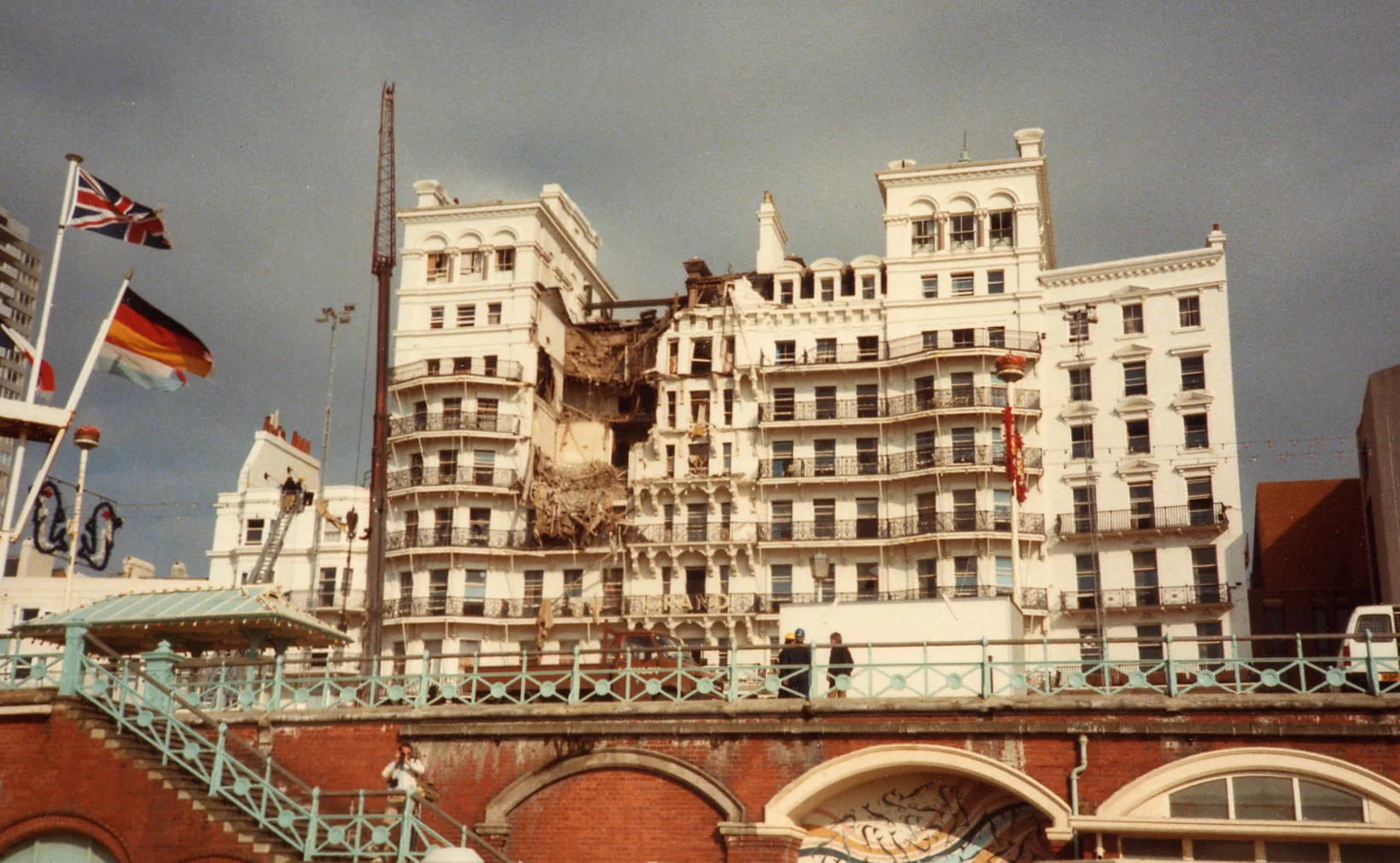
Why it matters
Force made visible
Evidence dossier
Read this moment as a hinge
2 minute source-led readForce changes the field
Read 1984 AD as a hinge, not a label. The IRA bombed the Conservative Party conference hotel, killing five people. That places “The Brighton Bomb Targets the British Cabinet” between “A New Assembly Fails to Achieve Devolution” and “Anglo-Irish Agreement”, while immediate harm and the longer construction of consent, accountability and peace had to be held in the same frame.
Ireland inside a larger game
Bring the frame down to one life in Brighton, England: someone calculating risk with incomplete information and irreversible stakes. The public event is the visible surface; underneath it sits organisation, logistics, targets and the political consequences of violence, intersecting with empire, diplomacy, war, diaspora and decisions made beyond the island.
What this changes next
Prime Minister Margaret Thatcher survived and the conference continued. Its importance lies in the altered field it leaves behind: the next actors inherit different risks, institutions and choices. Remove this record and the move from “A New Assembly Fails to Achieve Devolution” to “Anglo-Irish Agreement” becomes much harder to explain.
Unexpected angle“Grand Hotel following bomb attack, 12 October 1984” is a direct archival trace, but it is still an argument made by framing. Ask what sits outside the image before treating visibility as completeness.
Source ledger