Evidence record · Ireland
1923 ADBallyseedy Exposes Civil War Brutality
National Army officers tied republican prisoners to a mine at Ballyseedy; eight died. The atrocity embodied the conflict’s reprisal violence.
Open the interactive frame→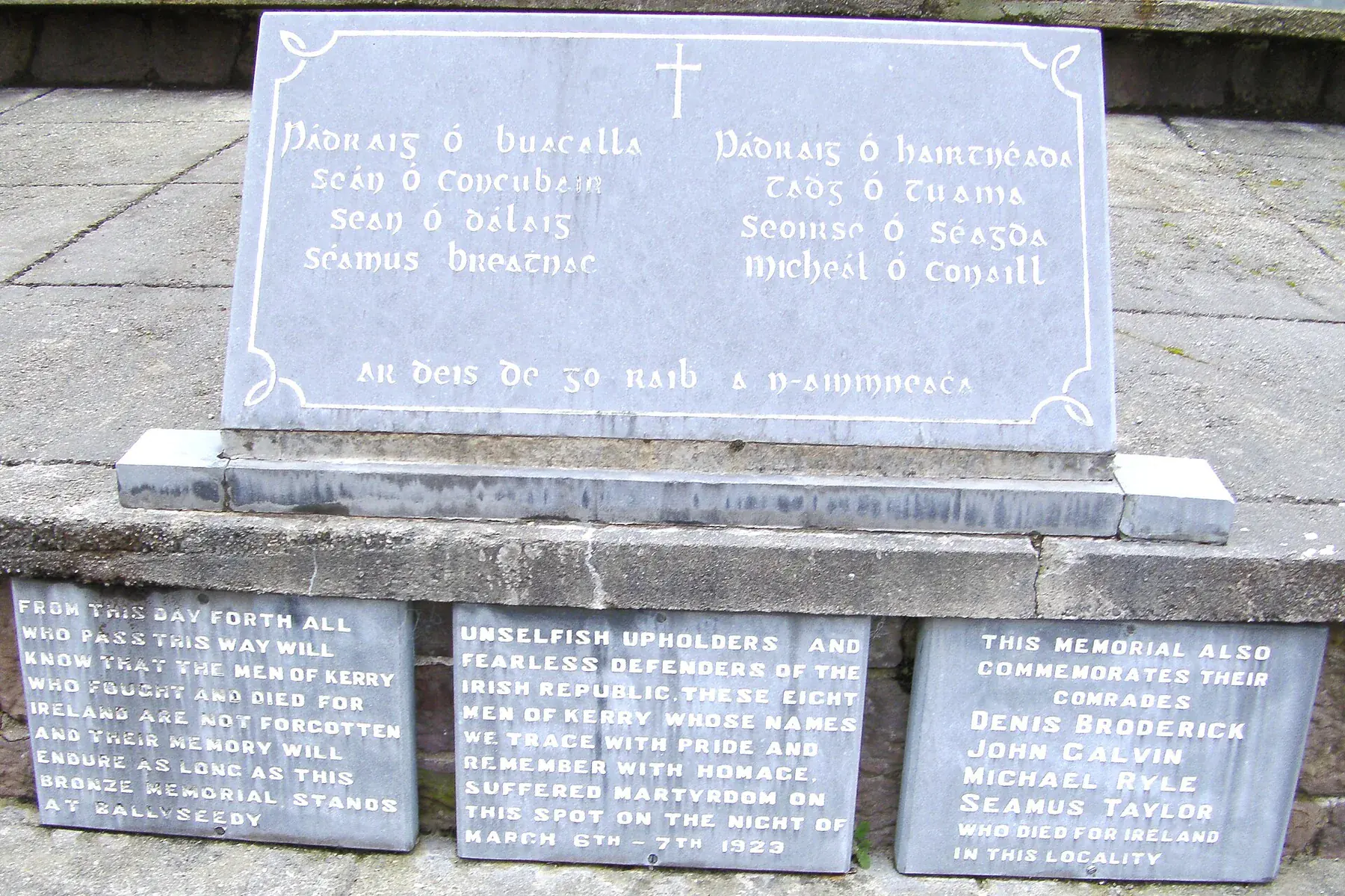
Why it matters
Force made visible
Evidence dossier
Read this moment as a hinge
2 minute source-led readForce changes the field
Read 1923 AD as a hinge, not a label. National Army officers tied republican prisoners to a mine at Ballyseedy; eight died. That places “Ballyseedy Exposes Civil War Brutality” between “The Irish Free State Comes into Being” and “Liam Lynch Is Fatally Wounded”, while legitimacy was moving between parliament, street, armed organisation and treaty table.
Put one person in the frame
Bring the frame down to one life in Ireland: someone calculating risk with incomplete information and irreversible stakes. The public event is the visible surface; underneath it sits organisation, logistics, targets and the political consequences of violence.
What this changes next
The atrocity embodied the conflict’s reprisal violence. Its importance lies in the altered field it leaves behind: the next actors inherit different risks, institutions and choices. Remove this record and the move from “The Irish Free State Comes into Being” to “Liam Lynch Is Fatally Wounded” becomes much harder to explain.
Unexpected angle“Ballyseedy memorial” records remembrance rather than the event itself. That distance is useful: it shows what a later generation chose to make durable—and what it asked visitors to carry forward.
Source ledger