Evidence record · Ireland
1920 ADWorkers Refuse to Carry Munitions
Railway and dock workers resisted transporting British troops and military supplies. Dismissals and disruption made organised labour an independent actor in the conflict.
Open the interactive frame→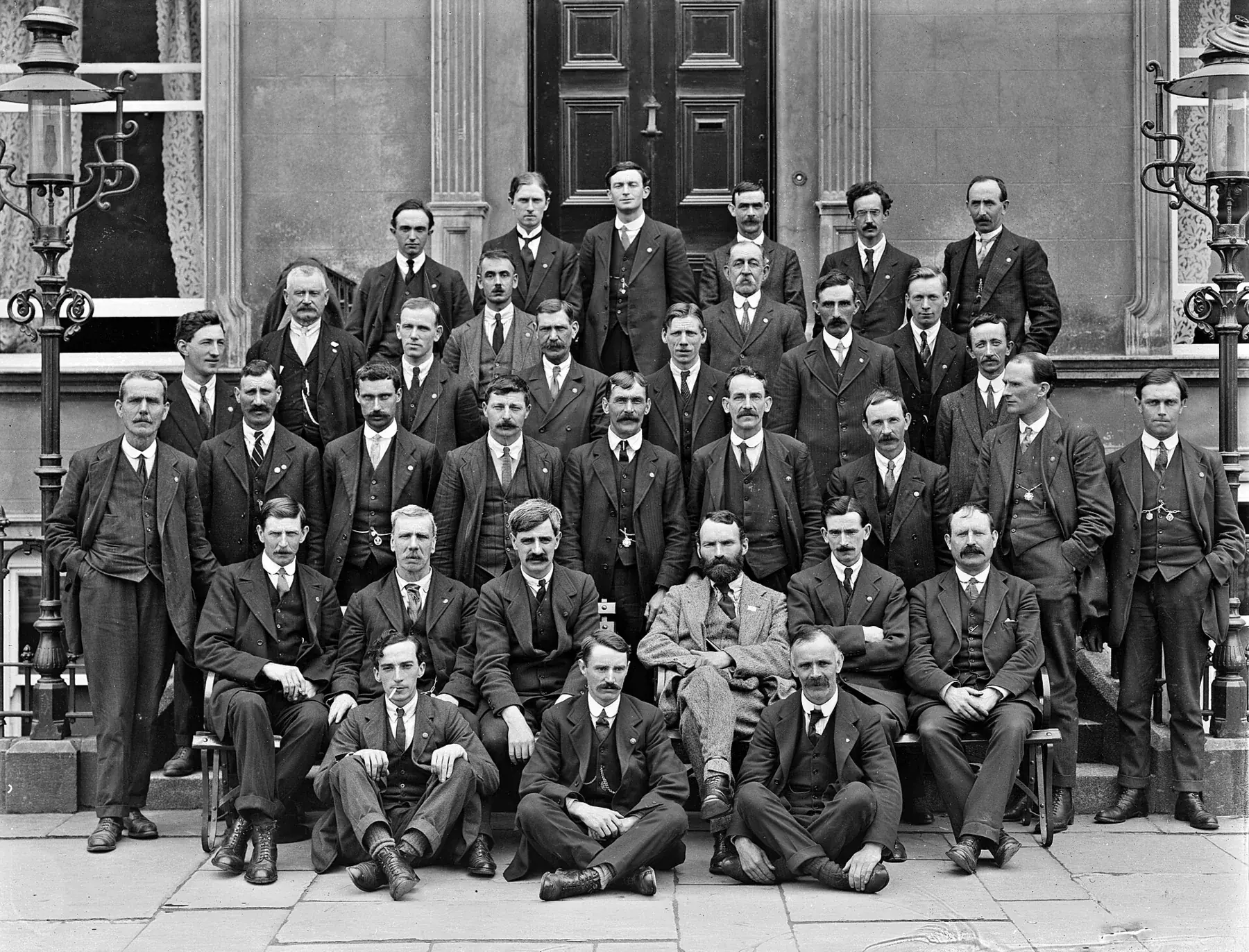
Why it matters
Labour made visible
Evidence dossier
Read this moment as a hinge
2 minute source-led readWork becomes collective power
Read 1920 AD as a hinge, not a label. Railway and dock workers resisted transporting British troops and military supplies. That places “Workers Refuse to Carry Munitions” between “The IRA Offensive Widens” and “Terence MacSwiney Dies on Hunger Strike”, while legitimacy was moving between parliament, street, armed organisation and treaty table.
The public becomes machinery
Bring the frame down to one life in Ireland: a worker deciding whether private hardship can be answered collectively. The public event is the visible surface; underneath it sits pay, working conditions, solidarity and the state’s response to organised labour, intersecting with crowds, petitions, boycotts and meetings converting numbers into pressure.
What this changes next
Dismissals and disruption made organised labour an independent actor in the conflict. Its importance lies in the altered field it leaves behind: the next actors inherit different risks, institutions and choices. Remove this record and the move from “The IRA Offensive Widens” to “Terence MacSwiney Dies on Hunger Strike” becomes much harder to explain.
Unexpected angle“ITGWU and ITUG members, August 1918” is representative, not eyewitness evidence. Use the gap creatively: compare what the image can suggest with what only the written record can establish.
Source ledger