Evidence record · Ireland
1847 ADSoup Kitchens Replace Public Works
The Temporary Relief Act authorised state-backed kitchens. By July about three million people a day depended on their rations.
Open the interactive frame→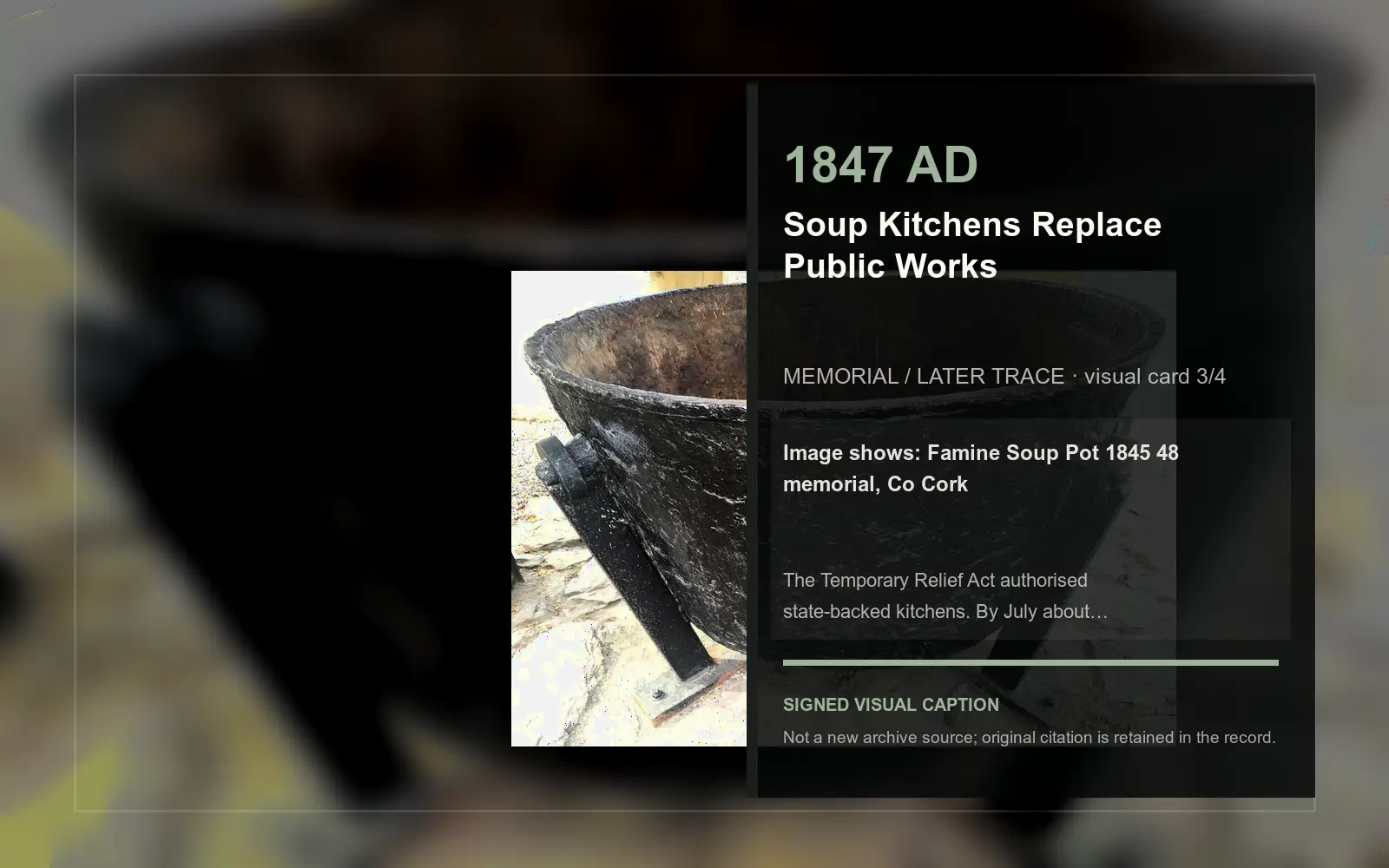
Why it matters
Power made visible
Evidence dossier
Read this moment as a hinge
2 minute source-led readThe rulebook moves
Read 1847 AD as a hinge, not a label. The Temporary Relief Act authorised state-backed kitchens. That places “Soup Kitchens Replace Public Works” between “Public Works Become the Main Relief” and “The Fever Act Creates Temporary Hospitals”, while hunger, relief, eviction and emigration turned policy into a test measured in human survival.
Follow the material pressure
Bring the frame down to one life in Ireland: a person discovering that the same vote, oath or border now carries a different meaning. The public event is the visible surface; underneath it sits representation, sovereignty and the institutions entitled to make binding decisions, intersecting with land, food, wages, rent, trade and debt beneath the public argument.
What this changes next
By July about three million people a day depended on their rations. Its importance lies in the altered field it leaves behind: the next actors inherit different risks, institutions and choices. Remove this record and the move from “Public Works Become the Main Relief” to “The Fever Act Creates Temporary Hospitals” becomes much harder to explain.
Unexpected angle“Famine Soup Pot 1845 48 memorial, Co Cork” is presented through an editorial composite derived from a catalogued visual source. Treat the design as an invitation, not evidence: verify the historical claim in the source ledger and use the constructed frame to ask what no surviving image can show.
Source ledger