Evidence record · Ulster
1622 ADA Royal Survey Finds Plantation Gaps
An official inquiry found undertakers missing, fortifications incomplete and many Irish tenants still on planted estates. Colonisation advanced unevenly, not according to plan.
Open the interactive frame→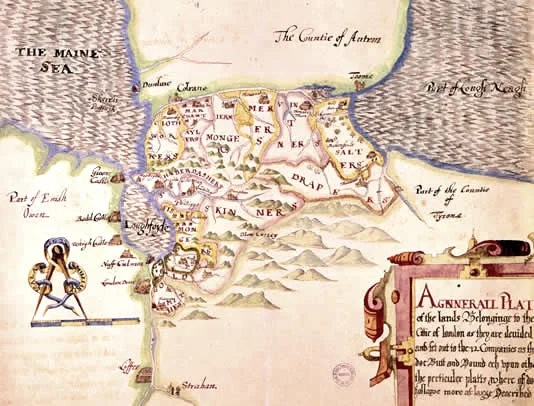
Why it matters
Government made visible
Evidence dossier
Read this moment as a hinge
2 minute source-led readPower becomes procedure
Read 1622 AD as a hinge, not a label. An official inquiry found undertakers missing, fortifications incomplete and many Irish tenants still on planted estates. That places “A Royal Survey Finds Plantation Gaps” between “Derry’s Walls Enclose a Plantation City” and “The Graces Promise Reform”, while land, law, confession and settlement were being locked together into a durable order.
The social contract shifts
Bring the frame down to one life in Ulster: the person at the desk—or across it—where policy becomes an instruction. The public event is the visible surface; underneath it sits offices, law, taxation and bureaucracy turning a decision into daily reality, intersecting with class, family, welfare, identity and the rules that organise belonging.
What this changes next
Colonisation advanced unevenly, not according to plan. Its importance lies in the altered field it leaves behind: the next actors inherit different risks, institutions and choices. Remove this record and the move from “Derry’s Walls Enclose a Plantation City” to “The Graces Promise Reform” becomes much harder to explain.
Unexpected angle“Thomas Raven’s 1622 map of County Londonderry estates allotted to London livery companies” is representative, not eyewitness evidence. Use the gap creatively: compare what the image can suggest with what only the written record can establish.
Source ledger